

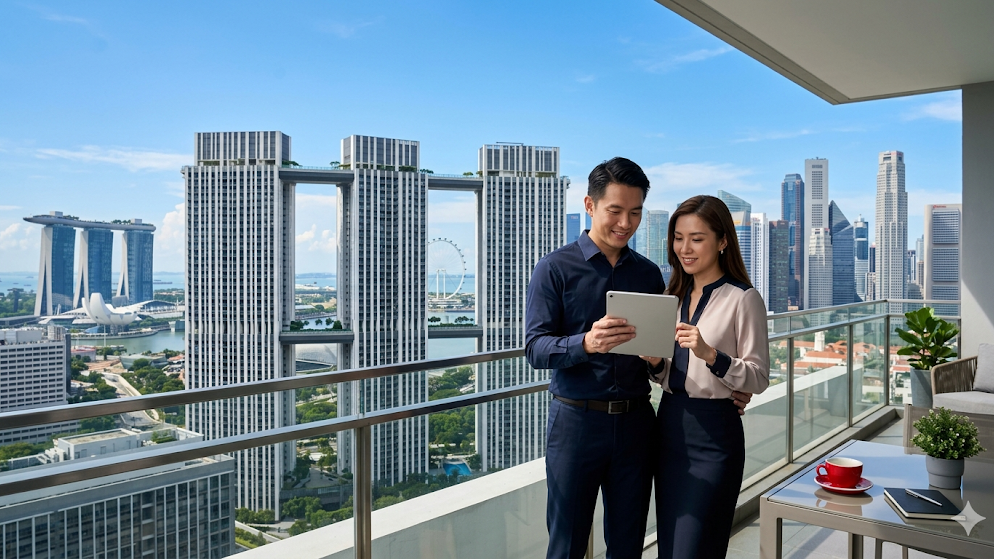
The most valuable residential land in Singapore is concentrated within the immediate city centre and the Greater Southern Waterfront. Historically, public housing situated in these ultra-premium zones yielded massive windfall profits for early owners when sold on the open market. To ensure these central locations remain accessible and equitable for future generations, the Ministry of National Development (MND) introduced the Prime Location Public Housing (PLH) model.
The PLH model provides substantial upfront subsidies to offset the inherently high land costs of the city centre. However, this initial affordability is balanced by the strictest set of ownership and resale conditions currently applied in the public housing sector, fundamentally altering how owners must plan their long-term capital allocation.
What is the subsidy recovery rate for Prime flats?
Under the Prime Location Public Housing (PLH) model, owners are subject to a 12% subsidy recovery upon the resale of their flat. This fixed percentage is returned to the HDB, reflecting the exceptionally high initial subsidies provided for these premium central locations.
This mechanism ensures that the PLH model remains an avenue for genuine, long-term owner-occupation rather than a vehicle for short-term speculative property flipping.
Assessing the Capital Impact Upon Resale
Because the PLH model commands the highest initial subsidies, it also carries the heaviest recovery percentage. This deduction is calculated based on the final resale price or the market valuation, whichever is higher.
If a household successfully completes their mandatory 10-year Minimum Occupation Period (MOP) and sells their Prime flat for $1,200,000, the 12% subsidy recovery equates to $144,000. This sum is deducted directly from the sale proceeds. For upgrading families, this represents a massive reduction in the net capital available to fund their next Central Provident Fund (CPF) downpayment or offset the stamp duties for a private condominium.
Evaluating Long-Term Property Timelines
Prospective buyers must weigh the immediate lifestyle benefits of central living against the long-term constraints on their capital and mobility.
A household that prioritises ultimate convenience might ballot for a PLH flat in the city centre. They benefit from an unmatched location and heavily subsidised entry price. However, they must accept a 10-year MOP, during which they cannot rent out the entire flat. When they eventually sell, the $144,000 (or higher) capital reduction significantly alters their future purchasing power in the private market.
Conversely, a household highly focused on aggressive wealth accumulation and property upgrading might intentionally target a Standard flat in the Outside Central Region (OCR). They accept a longer commute but operate under a standard 5-year MOP. Upon selling, they face 0% subsidy recovery, allowing them to retain their maximum net proceeds and seamlessly transition their accumulated CPF equity into the private property sector much earlier in their lives.
Managing Resale Liquidity Risks
Beyond the financial clawback, PLH owners face a unique structural limitation when exiting the market: a restricted buyer pool.
Unlike Standard or Plus flats, resale PLH flats can only be sold to buyers who meet strict eligibility criteria, including a hard $14,000 monthly household income ceiling. Finding a buyer who earns under this limit, yet possesses enough cash and CPF to afford a million-dollar central flat, is mathematically challenging. This significantly limits resale liquidity, meaning PLH flats may take considerably longer to sell on the open market compared to unrestricted properties.
The Bottom Line
The Prime Location Public Housing model offers an incredible opportunity to secure a home in Singapore’s most prestigious districts. However, the accompanying 12% subsidy recovery and strict resale conditions make it a definitive, long-term lifestyle choice rather than a stepping stone for rapid property upgrading.
Before committing to a PLH ballot, review your 15-year property timeline. Speak with a qualified property agent to accurately model how the 12% clawback and the restricted future buyer pool will impact your specific retirement and wealth accumulation goals.
Disclaimer: The information is provided for general information only. PropertyGuru Pte Ltd makes no representations or warranties in relation to the information, including but not limited to any representation or warranty as to the fitness for any particular purpose of the information to the fullest extent permitted by law. While every effort has been made to ensure that the information provided in this article is accurate, reliable, and complete as of the time of writing, the information provided in this article should not be relied upon to make any financial, investment, real estate or legal decisions. Additionally, the information should not substitute advice from a trained professional who can take into account your personal facts and circumstances, and we accept no liability if you use the information to form decisions.