

Lifestyle has become one of the most overused words in Singapore’s property market. Too often it stands in for marketing gloss or amenity lists rather than any meaningful idea of how people actually live. Frasers Property Singapore has taken a different path.
Its recent portfolio is small but confident, shaped by greenery, heritage and a sensitivity to the rhythms of daily life. Its Best Lifestyle Developer win at the PropertyGuru Asia Property Awards (Singapore) 2025 reflects a clear understanding that lifestyle is an experience built through design.
Though established in its current form only in 2018, Frasers Property Singapore inherits a longer placemaking lineage from the wider group. What distinguishes the Singapore arm is its focus on measured, human-scaled environments: projects designed around walkability, natural ventilation, planting and community spaces. With four completed developments since 2020, it does not compete on volume. Instead, it concentrates on the architecture of everyday life — the transitions between street and home, the pocket spaces where people gather, the way greenery softens height and creates comfort in a compact city.
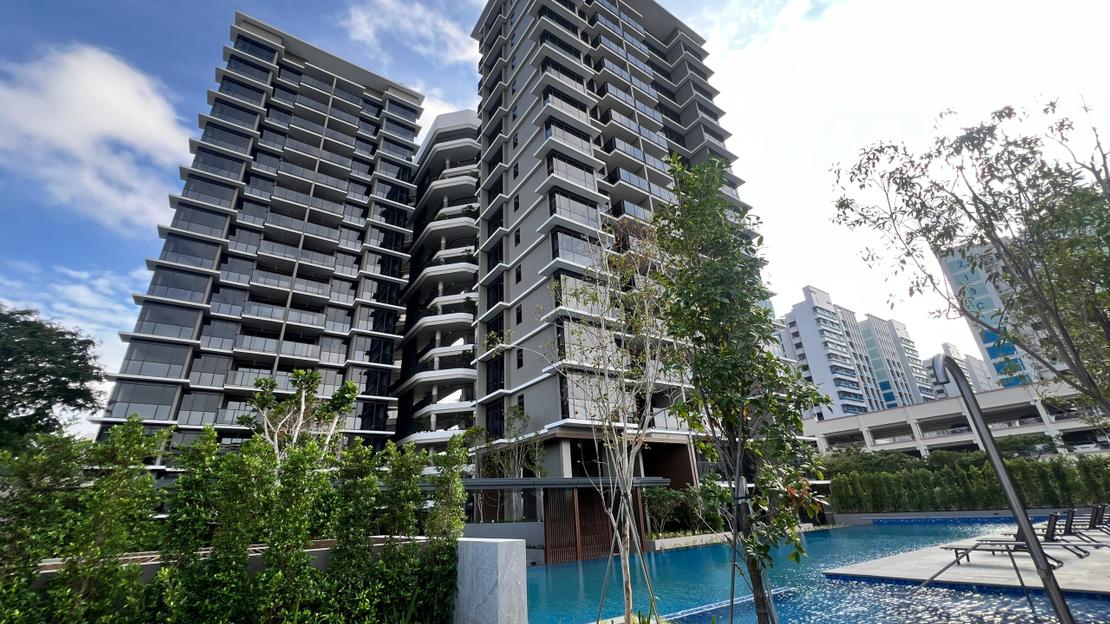
Sky Eden @ Bedok, the fully sold mixed-use development that recently obtained TOP, is perhaps the clearest statement of intent. With sky gardens running along every level, the development treats biodiversity and vertical greenery not as embellishment but as part of the building’s structure. Communal decks link neighbours through planted corridors, while the ground plane folds naturally into Bedok’s existing heartland fabric. It is a lifestyle concept rooted in ecology, shade, airflow and community rather than large gestures.
Two launches in 2025 — The Orie and The Robertson Opus — continued this direction in different settings. The Orie, a BCA Green Mark Platinum Super Low Energy project, uses layered greenery and thoughtful zoning to create a sense of calm within a tight urban footprint. The Robertson Opus takes a similar approach within a riverfront district, using biophilic design to introduce pockets of quiet into a neighbourhood better known for its dining and nightlife. Together, they demonstrate a shift away from amenity-driven lifestyle offerings towards developments designed to support well-being, privacy and connection.
Lifestyle, for Frasers, extends beyond residential towers. The asset enhancement of Tampines 1 in 2024 brought approximately 200 new and refreshed retail offerings into a maturing suburban hub. More than a commercial refresh, the project introduced sustainability-driven upgrades — solar installations, energy-efficient lighting and water-saving features — while becoming part of Singapore’s first brownfield distributed district cooling network. The result is an improved microclimate and a more comfortable public realm. It is lifestyle delivered through climate-responsive design and better everyday experiences rather than short-lived novelty.
Heritage has also become a subtle but significant part of the company’s placemaking language. The conservation of the three former Jiak Kim Street warehouses, recognised with URA’s Architectural Heritage Award in 2024, transformed the structures into anchors of a modern riverside precinct. As part of the Rivière development and Fraser Residence River Promenade, they frame a new public realm that blends memory and modernity. In a city where redevelopment often erases what came before, this is a reminder that lifestyle is also shaped by history and continuity.
Across these projects, a unifying idea emerges. Frasers Property Singapore designs micro-environments: small, intentional “urban rooms” where greenery, circulation and community overlap. Its developments consider how residents move through space: shaded walkways that stay cool in the afternoon, planted terraces that double as neighbourhood meeting points, riverfront edges that feel open rather than exclusive. These are not dramatic architectural statements; they are choices that influence comfort, belonging and well-being.
This is what sets Frasers apart in a competitive category. Where lifestyle is often communicated through branding and imagery, Frasers expresses it through how space feels underfoot. Its projects place nature and walkability ahead of spectacle, and renewal ahead of reinvention. Even its sustainability strategies — nature-positive design, biophilic planning, solar-integrated upgrades — serve the lifestyle experience rather than sit beside it as separate initiatives.
Looking ahead, this direction seems well aligned with Singapore’s broader shift towards climate-responsive, people-centred development. Sky Eden will set a new benchmark for vertical greenery when it completes in 2025, while further retail enhancements and heritage-led placemaking will continue shaping neighbourhoods in ways that feel grounded rather than imposed. In a city increasingly shaped by heat, density and urban growth, Frasers’ approach offers a reminder that lifestyle is ultimately built through the quality of everyday moments.
In a city increasingly shaped by heat, density and urban growth, Frasers’ approach is a reminder that lifestyle is built in the small, repeated moments of daily life — the cooled walkway, the planted terrace, the familiar streetscape — not only in the headline features of a launch.
Disclaimer: The information is provided for general information only. PropertyGuru Pte Ltd makes no representations or warranties in relation to the information, including but not limited to any representation or warranty as to the fitness for any particular purpose of the information to the fullest extent permitted by law. While every effort has been made to ensure that the information provided in this article is accurate, reliable, and complete as of the time of writing, the information provided in this article should not be relied upon to make any financial, investment, real estate or legal decisions. Additionally, the information should not substitute advice from a trained professional who can take into account your personal facts and circumstances, and we accept no liability if you use the information to form decisions.