


Monthly repayments still cause hesitation. Many buyers stop and recalculate. Homeowners review loan statements more often. Small rate changes affect cash flow fast.
Recent reports show banks reduced fixed home loan offers to between 1.4% and 1.8% by late last year, after rates sat closer to 3% earlier. This shift reshaped how borrowers think about risk and timing. Fixed packages attract those seeking payment certainty. Floating loans remain part of the conversation for owners tracking market movements closely.
The Singapore mortgage rate landscape now feels more complex. Choosing a loan involves more than picking the lowest number. Structure, flexibility, and future adjustments matter more than before.
This guide explains how mortgage rates work today. It covers current trends, key drivers, and clear ways to compare home loan options. The aim stays simple. To help plan a mortgage with fewer surprises and steadier expectations.
Table of Contents
1. What Drives Singapore Mortgage Rates In 2026 And Beyond
2. Mortgage Rates Singapore 2026: Current Trends And Market Direction
3. Fixed Rate And Floating Rate Home Loans In Singapore
4. Comparing Bank Mortgage Rates In Singapore
5. Singapore Mortgage Rate Calculator: Estimating Monthly Repayments
6. Singapore Mortgage Rates History: Putting Today’s Rates In Context
7. How Should You Plan Your Mortgage In Today & Rate Environment?
1. What Drives Singapore Mortgage Rates In 2026 And Beyond
2. Mortgage Rates Singapore 2026: Current Trends And Market Direction
3. Fixed Rate And Floating Rate Home Loans In Singapore
4. Comparing Bank Mortgage Rates In Singapore
5. Singapore Mortgage Rate Calculator: Estimating Monthly Repayments
6. Singapore Mortgage Rates History: Putting Today’s Rates In Context
7. How Should You Plan Your Mortgage In Today & Rate Environment?
Ready to plan your home loan?
Estimate your monthly mortgage repayments in minutes.
What Drives Singapore Mortgage Rates In 2026 And Beyond
Mortgage rates shape monthly repayments, loan comfort, and long-term cash planning. Many buyers want clear answers. Why do rates move? What leads banks to change pricing?
The Singapore mortgage rate reflects both market forces and local rules set by the Monetary Authority of Singapore. These factors explain why pricing remained elevated earlier in the decade and why easing mortgage rates Singapore 2025.
Banks start with two core checks: funding cost and credit risk.

Key drivers include:
• Global Interest Rate Trends: Local banks fund and hedge loans in international markets. Shifts in United States Federal Reserve policy and global rates flow into local mortgage pricing.
• Local Benchmarks: Most floating loans track the Singapore Overnight Rate Average, known as SORA. When SORA moves, monthly repayments adjust in the same direction.
• Bank Funding and Margins: Each bank adds a spread over the benchmark. This spread reflects internal funding costs, risk appetite, and lending targets. This explains pricing differences across banks.
• Loan Size and Tenure: Larger loan amounts and shorter tenures often receive sharper pricing. Lower risk exposure supports better rates.
• Property Type: Housing and Development Board (HDB) flats follow tighter CPF and government rules, including the fixed HDB rate of 2.6%. Private property loans rely fully on bank pricing and allow wider loan structures.
• Borrower Profile: Stable income, manageable debt levels, and clean credit records support stronger pricing outcomes.
These drivers move together. A shift in one area affects the final offer. This explains why similar buyers receive different quotes in the same period. Understanding these forces helps you compare packages with clearer expectations and stronger confidence.
Mortgage Rates Singapore 2026: Current Trends And Market Direction
Mortgage pricing in Singapore changed through 2025. Rates moved down from the highs in 2023, when many loan packages were above 3%. Lower bank funding costs and a decline in SORA affected loan pricing. Buyers and homeowners began to review their options more carefully. Many looked beyond the interest rate and also focused on the loan structure.
Several trends now shape the market:
• Fixed-Rate Packages Became More Competitive: Banks reduced fixed-rate pricing after a long period of elevated rates. Many fixed-rate packages now start below 1.8% for qualifying loan amounts, often around $500,000 or more. This appeals to borrowers who prefer stable monthly repayments.
• Floating Rates Tracked Lower SORA: SORA-linked loans fell as the benchmark declined. Existing borrowers saw instalments ease. Floating options regained attention from those comfortable with rate movement.
• Refinancing Activity Picked Up: More homeowners reviewed existing loans. Many HDB owners compared bank offers below 2.6% with the HDB concessionary rate of 2.6% and considered switching to reduce interest costs.
• Banks Adjusted Pricing And Features: Lenders introduced tighter spreads, promotional rates starting from about 1.35%, and flexible repricing options. These changes targeted borrowers actively comparing loan packages.
• Borrower Preferences Remained Split: Risk-averse buyers leaned toward fixed rates for payment certainty. Others chose floating loans to benefit from further easing. Income stability and comfort with risk guided these choices.
The market now sits between recent peaks and earlier low-rate periods. For decisions ahead, loan structure, flexibility, and planning matter more than chasing the lowest headline rate.
Fixed Rate And Floating Rate Home Loans In Singapore
Choosing between fixed and floating loans remains one of the most important decisions when comparing the Singapore mortgage rate. Each option works differently. Each suits a different comfort level with risk and repayment changes.
Understanding how both loan types behave helps narrow choices before comparing the best home loan rates Singapore across banks.

- Fixed-Rate Home Loans
A fixed-rate loan locks the interest rate for a set period, often one to three years. Monthly repayments stay the same during this time. This suits buyers who value payment certainty and prefer clear budgeting, especially during the early years of ownership.
- Floating-Rate Home Loans
Floating loans move with a benchmark, most commonly SORA. When the benchmark falls, repayments decrease. When it rises, instalments increase. These loans appeal to borrowers who monitor rates closely and accept repayment changes over time.
- Lock-In And Flexibility Differences
Fixed-rate loans usually include lock-in periods and early-repayment charges. Floating-rate loans often offer greater flexibility, though spreads and repricing terms still matter.
- Cost Comparison Over Time
A lower fixed rate does not always remain cheaper in the long term. Floating loans can cost less during stable or declining rate periods but involve more uncertainty.
Both fixed and floating loan types remain widely available. Banks price them differently based on market conditions and borrower demand. Understanding these differences makes the next step clearer. Comparing bank-specific offers with a sharper focus and fewer assumptions.
Thinking about your next home?
Check your affordability and plan your purchase wisely.
Comparing Bank Mortgage Rates In Singapore
After choosing between fixed and floating-rate loans, the next step is to compare offers from different banks. This is where many buyers feel stuck. Rates look similar at first glance, but the final cost can differ meaningfully.
Banks price home loans based on funding costs, borrower profile, and loan size. This explains why the Singapore mortgage rate varies even within the same period. Understanding how each bank approaches pricing helps narrow options faster.
1. DBS Mortgage Rate
DBS offers both fixed-rate and SORA-linked home loans. Fixed packages focus on repayment stability, often with one- to three-year lock-in periods. Options such as a DBS fixed rate home loan appeal to buyers who want predictable instalments during the early years.
Fixed Home Loan
1.50% to 1.78%
1.50% to 1.78%
1.78% (followed by floating)
3M SORA + spread
Promotional Low Fixed*
As low as 1.35%
Same fixed*
Fixed set period*
Floating resets after fixed*
Floating packages are structured around SORA plus a spread. These suit borrowers who review loans regularly and value repricing flexibility.
2. OCBC Mortgage Rates
OCBC mortgage packages emphasise flexibility. Many loans include options for partial prepayment and repricing during the loan term. Rates vary by loan amount, with sharper pricing usually offered for larger loans.
OCBC
1-Year Fixed
2.00%
2.00%
1M SORA + spread
OCBC
2-Year Fixed
1.80%
1.80%
1M SORA + spread
OCBC
3-Year Fixed
1.88%
1.88%
1M SORA + spread
Borrowers comparing OCBC loans often look beyond the headline rate and focus on repayment flexibility and long-term cost control.
3. HSBC Singapore Mortgage Rates
HSBC targets borrowers with stable income profiles and larger loan amounts. Mortgage packages often include promotional fixed-rate periods or SORA-linked options.
1-Year Fixed
2.20%*
1M SORA + 0.45% spread*
2-Year Fixed
2.20%*
1M SORA + 0.45% spread*
3-Year Fixed
2.20% (or higher)*
1M SORA + 0.45% spread*
Some HSBC loans are bundled with banking relationship features, which can influence final pricing. Loan size and eligibility criteria play a larger role in rate competitiveness.
What To Compare Beyond The Rate?
Before choosing a bank, it helps to look past the headline number.
Key comparison points include:
- Lock-in period and early repayment charges
- Repricing fees and review flexibility
- Loan quantum requirements for promotional rates
- Long-term cost over the full loan tenure
Two loans with similar rates can produce different outcomes once fees and flexibility are factored in.
Singapore Mortgage Rate Calculator: Estimating Monthly Repayments
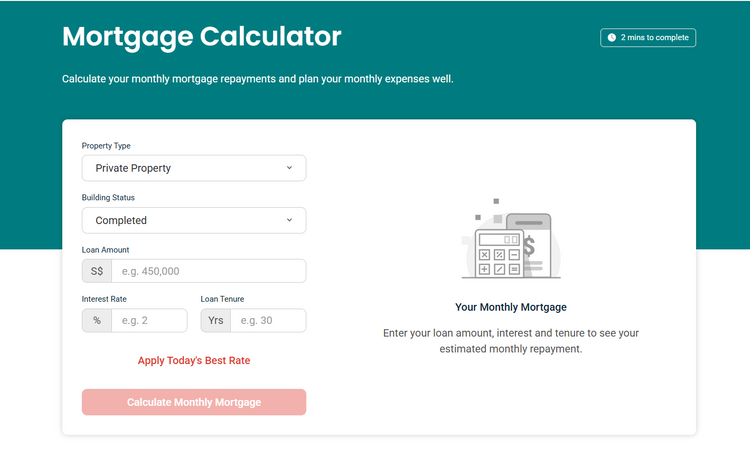
After reviewing bank rates, the next practical step is to estimate monthly repayments. This is where a Singapore mortgage rate calculator comes in handy. It helps translate interest rates into real numbers that affect daily spending and savings.
A mortgage calculator works by combining a few key inputs. Minor changes to any of these can meaningfully shift monthly instalments.
Key inputs usually include:
• Loan Amount: This is the total sum borrowed from the bank. Higher loan amounts lead to higher monthly repayments, even if the interest rate stays the same.
• Loan Tenure: Most home loans in Singapore run between 20 and 30 years. A longer tenure lowers monthly repayments but increases total interest paid over time.
• Interest Rate Level: Even a 0.25% change can shift monthly payments by hundreds of dollars over the full loan tenure.
Using a calculator helps test different scenarios. Buyers can compare fixed-rate and floating-rate options. Homeowners can check whether refinancing makes sense. It also helps avoid overstretching monthly budgets.
Mortgage calculators provide estimates; actual repayments depend on final bank approval and loan structure. Running these numbers early helps set realistic expectations and supports better loan decisions.
Singapore Mortgage Rates History: Putting Today’s Rates In Context
Mortgage rates in Singapore move in cycles. Looking at past benchmarks helps explain why current pricing feels different and why loan planning has become more cautious.
For many years, home loans were priced using older benchmarks. This changed in recent years as the market transitioned to a new system.
Key Mortgage Benchmark Changes In Singapore:
Pre-2022
SIBOR
Below 1% for extended periods
2023–2024
SIBOR (phasing out)
Around 3.0% to 3.28%
2024 onwards
SORA
Fully replaced SIBOR
SIBOR remained low for many years. This shaped expectations around borrowing costs. When global rates rose, SIBOR climbed quickly. This led to a sharp rise in mortgage repayments for borrowers on floating packages.
To improve transparency and reliability, Singapore moved fully to the Singapore Overnight Rate Average, or SORA.
SORA Movement And Its Impact On Home Loans
SORA reflects actual overnight interbank borrowing costs. As a result, floating mortgage rates now respond more directly to market conditions.
Start of 2025
Around 3.00%
Higher floating repayments
Mid-2025
Around 2.00%
Repayments began easing
End of 2025
Around 1.20% to 1.30%
Clear relief for borrowers
As SORA declined through 2025, floating mortgage rates fell faster than fixed packages. Fixed rates adjusted more gradually because banks priced in future expectations and funding risks.
What This History Means For Borrowers Today
Current mortgage rates sit between past extremes. They are lower than the peaks seen during the recent tightening cycle, but higher than the ultra-low period before 2022.
The shift to SORA also changed how floating loans behave. Repayments now move more closely with market conditions. This makes loan reviews and repricing more important over time.
Understanding this history helps set realistic expectations. Mortgage rates rise and fall. Planning around structure, flexibility, and long-term affordability matters more than assuming rates will stay low.
How Should You Plan Your Mortgage In Today’s Rate Environment?
Mortgage decisions feel heavier when rates move. Monthly repayments affect daily life. Small differences add up over time. This is why understanding the Singapore mortgage rate matters before signing any offer.
Rates have eased from recent highs, but they are no longer at historic lows. Fixed and floating options both have a place. The right choice depends on income comfort, loan structure, and how often a loan is reviewed. Chasing the lowest number alone rarely works.
The next step is clarity. Compare loan packages carefully. Check lock-in periods, repricing rules, and flexibility. Use a Singapore mortgage rate calculator to see how different rates affect monthly repayments. This helps avoid overstretching and surprises later.
Planning to buy or review a home loan soon? Start by comparing current mortgage packages and repayment options with PropertyGuru calculators.
For more housing guides, rate updates, and planning tips, explore the PropertyGuru Guides section.
Still deciding on a home? Browse the latest new launches and resale listings across Singapore to plan your next move with confidence.
Disclaimer: The information is provided for general information only. PropertyGuru Pte Ltd makes no representations or warranties in relation to the information, including but not limited to any representation or warranty as to the fitness for any particular purpose of the information to the fullest extent permitted by law. While every effort has been made to ensure that the information provided in this article is accurate, reliable, and complete as of the time of writing, the information provided in this article should not be relied upon to make any financial, investment, real estate or legal decisions. Additionally, the information should not substitute advice from a trained professional who can take into account your personal facts and circumstances, and we accept no liability if you use the information to form decisions.