


Signing or preparing a tenancy agreement often feels confusing, especially when you are unsure which clauses are mandatory, what is legally acceptable in Singapore, or whether a basic format is enough to protect your interests.
Landlords worry about missed legal requirements, while tenants fear hidden conditions that could cause problems later. Searching online only adds to the confusion, with countless versions of a tenancy agreement template and tenancy agreement PDF that may not even apply locally.
This guide clears the clutter by breaking down everything you need to know about a tenancy agreement in Singapore, using clear language and practical examples. Whether you are looking for a Tenancy Agreement Singapore PDF or trying to understand the rules around an HDB tenancy agreement, this article explains it step by step.
It also covers what needs to be declared under the IRAS tenancy agreement guidelines, so you know exactly what is required. You will also learn when a simple tenancy agreement works and when a more detailed document is necessary, helping both landlords and tenants move forward with clarity and confidence.
Table of Contents
What Is a Tenancy Agreement and Why Does It Matter?
Who Needs a Tenancy Agreement: Landlords, Tenants, or Both?
Tenancy Agreement Vs Rental Agreement: Legal Distinction In Singapore
Can You Use a Tenancy Agreement Template or PDF?
What Are the Rules for an HDB Tenancy Agreement?
What Does IRAS Require for a Tenancy Agreement?
When Does a Tenancy Agreement Need to Be Declared to IRAS?
Which Tenancy Agreement Clauses Need Extra Attention Before Signing?
What Is a Tenancy Agreement and Why Does It Matter?
Who Needs a Tenancy Agreement: Landlords, Tenants, or Both?
Tenancy Agreement Vs Rental Agreement: Legal Distinction In Singapore
Can You Use a Tenancy Agreement Template or PDF?
What Are the Rules for an HDB Tenancy Agreement?
What Does IRAS Require for a Tenancy Agreement?
When Does a Tenancy Agreement Need to Be Declared to IRAS?
Which Tenancy Agreement Clauses Need Extra Attention Before Signing?
What Is a Tenancy Agreement and Why Does It Matter?
A tenancy agreement is a written contract between a landlord and a tenant that clearly states the terms of renting a property. It sets out what both parties have agreed to, including rent, duration, responsibilities, and usage of the property.
In Singapore, a tenancy agreement matters because it reduces misunderstandings, helps prevent disputes, and provides written proof if any issue needs legal or regulatory reference later.
Without a proper tenancy agreement, even minor disagreements over rent payments, maintenance, or notice periods can escalate into bigger problems. An explicit agreement ensures both sides know their rights and duties from the start.
Who Needs a Tenancy Agreement: Landlords, Tenants, or Both?
A tenancy agreement is equally essential to both landlords and tenants, as it protects each party’s interests.
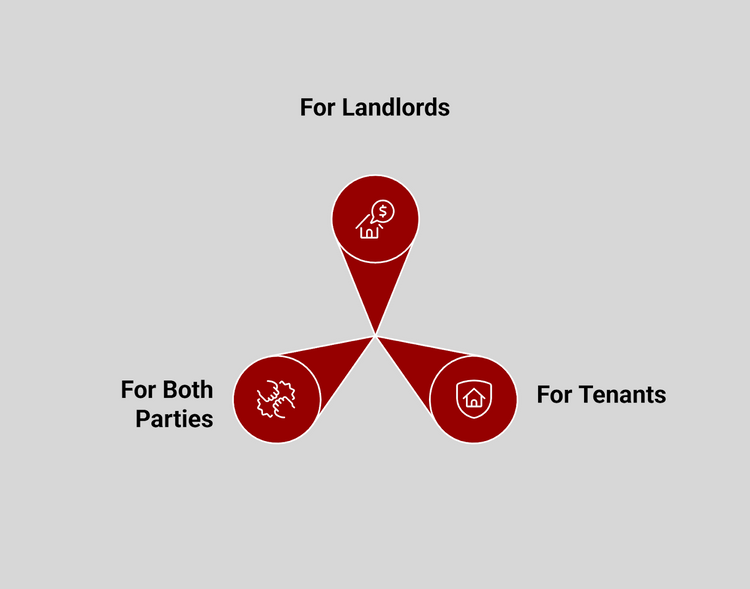
For landlords:
- Confirms the agreed rent, payment schedule, and security deposit
- Defines how the property can be used and maintained
- Helps support tax reporting and stamp duty requirements under IRAS
- Acts as written proof in case of rental disputes
For tenants:
- Clearly states the rental period and renewal terms.
- Protects against sudden rent changes or unfair eviction
- Clarifies responsibilities for repairs and maintenance
- Records agreed conditions such as furnishings and utilities.
For both parties:
- Creates a shared understanding of expectations
- Reduces the risk of verbal misunderstandings
- Provides a reference document if disagreements arise
In short, a tenancy agreement is not just a formality. It is a practical safeguard that helps landlords and tenants manage the rental relationship smoothly and confidently.
Searching for your next home?
Explore a wide range of properties for sale in one place.
Tenancy Agreement Vs Rental Agreement: Legal Distinction In Singapore
The terms tenancy agreement and rental agreement are often used interchangeably in everyday conversations and online searches. However, from a legal and regulatory perspective, there are important differences in how these terms are understood and applied, especially by government authorities.
Common usage in Singapore
Formal term commonly used in legal, regulatory, and official contexts
Informal term often used in property listings, templates, and general conversation
Legal status
Treated as a lease or tenancy that creates enforceable rights over the property
Not a separate legal category, treated as a tenancy if it grants exclusive possession
Government terminology
Used by the Housing & Development Board and the Inland Revenue Authority of Singapore in official guidance
Rarely used in government or statutory documents
Stamp duty (IRAS)
Must be declared and stamped if it meets IRAS requirements
Must also be declared and stamped if it meets the same requirements, regardless of name
Stamping timeline
Within 14 days if signed in Singapore, or 30 days if signed overseas
Same stamping timelines apply
Typical duration
Usually fixed-term, such as 12 or 24 months
Often used to describe short-term or periodic arrangements, such as month-to-month
Level of detail
More comprehensive, covering clauses on maintenance, termination, inventory, and obligations
Often shorter and simpler, with a higher risk of missing key protections
HDB rentals
Required format for HDB flat and room rentals
Not accepted as a substitute for an HDB tenancy agreement
Private property rentals
Commonly used for condominiums and landed homes
Sometimes used, but legal treatment depends on the actual terms
Enforceability in disputes
Stronger when properly drafted and stamped
Enforceable only if it meets tenancy requirements and is correctly stamped
Risk level
Lower risk when clearly drafted and compliant
Higher risk if overly basic or poorly customised
The name of the document does not determine its legal effect in Singapore. If an agreement sets out rent, duration, and grants exclusive possession of a property, it is treated as a tenancy for legal and tax purposes and must comply with IRAS and, where applicable, HDB requirements.
Using a properly drafted tenancy agreement provides clearer protection for both landlords and tenants and reduces the risk of disputes later.
Can You Use a Tenancy Agreement Template or PDF?
Tenancy agreement templates and PDFs are commonly used in Singapore and can be legally valid when properly customised, signed by both parties, and stamped with IRAS. They offer a standard starting point that saves time and effort, especially for straightforward rentals.
However, a tenancy agreement template or tenancy agreement PDF must always be adjusted to reflect the specific property, rental terms, and responsibilities agreed upon by the landlord and tenant. When used correctly, both parties benefit from clarity, consistency, and faster documentation.
What Are the Rules for an HDB Tenancy Agreement?
Renting out an HDB flat or room involves more than just signing a tenancy agreement. Because HDB flats are public housing, rentals are subject to specific rules and conditions that both landlords and tenants must follow.
This section outlines the key requirements, approvals, and responsibilities involved in an HDB tenancy agreement, helping you stay compliant and avoid penalties.
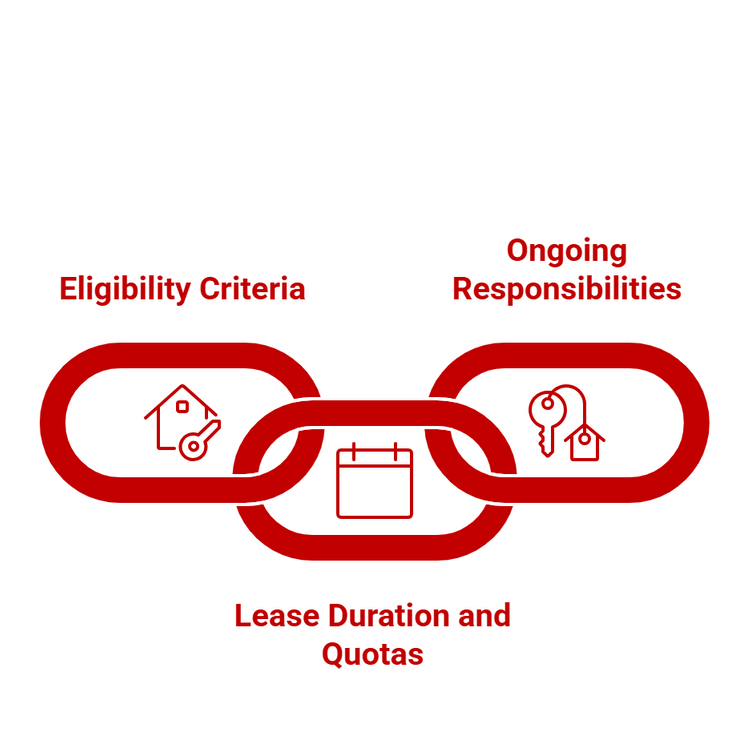
- Key HDB rules landlords and tenants must follow.
An HDB tenancy agreement is governed by specific public housing regulations that both landlords and tenants must comply with. Only eligible HDB owners, Singapore Citizens or Permanent Residents who have fulfilled the Minimum Occupation Period (typically five years) can rent out their flats. Entire flat rentals require prior online approval through My HDBPage, and Permanent Residents are not allowed to rent out whole flats.
- Lease duration, quotas, and occupancy limits
The minimum lease period under an HDB tenancy agreement is six months. The maximum approved duration is up to three years per approval for Singaporeans and Malaysians.
For other non-citizens, the maximum period is up to two years and remains subject to neighbourhood and block non-citizen quotas of 8% and 11% respectively.
Landlords must also ensure occupancy limits are followed, such as a maximum number of unrelated occupants.
- Ongoing responsibilities and compliance
Landlords are required to notify HDB within seven days of any changes, such as a new tenant or early termination. Subletting without approval is not allowed, and if only bedrooms are rented out during the Minimum Occupation Period, the owner must continue occupying at least one room. Even when using a simple tenancy agreement, these HDB rules must still be reflected clearly.
From eligibility and approval requirements to lease duration, occupancy limits, and ongoing compliance, every condition must be followed carefully. Whether landlords use a standard format or a simple tenancy agreement, all HDB-specific rules must be clearly reflected in the document. This helps avoid penalties and keeps the rental arrangement smooth and compliant for both parties.
Ready to own an HDB flat?
Check out the latest HDB listings in one place.
What Does IRAS Require for a Tenancy Agreement?
Understanding the Tenancy Agreement IRAS requirements is essential to ensuring a tenancy agreement is legally recognised in Singapore. This section explains what IRAS looks for in a tenancy agreement and why compliance matters for both landlords and tenants.
Purpose of the IRAS requirements
IRAS requirements ensure that tenancy agreements are properly recorded for tax and legal purposes. Stamping a tenancy agreement creates an official record of the rental arrangement and allows the document to serve as evidence in the event of disputes.
What details must be included?
For IRAS compliance, a tenancy agreement should clearly state:
- Names and identification details of the landlord and tenant
- Property address and type
- Rental amount, lease duration, and security deposit
- Any additional terms that affect rent or usage
Even a simple tenancy agreement must contain these basic details to meet IRAS expectations.
Who is responsible for compliance?
Either the landlord or the tenant can arrange stamping, depending on what is agreed in the contract. However, both parties share responsibility for ensuring the tenancy agreement is correctly declared and stamped.
Meeting IRAS requirements ensures a tenancy agreement is recognised correctly and legally reliable in Singapore. By including all essential details and completing stamping on time, both landlords and tenants create an official record that supports tax compliance and dispute resolution.
Regardless of who handles the process, shared responsibility helps ensure the tenancy agreement remains valid, transparent, and enforceable.
Find a private home that suits your lifestyle.
Browse private properties for sale across prime locations.
When Does a Tenancy Agreement Need to Be Declared to IRAS?
Many people are unsure about when a tenancy agreement must be declared or stamped. This section clarifies the timelines and circumstances in which an IRAS declaration is required, helping you avoid late penalties.
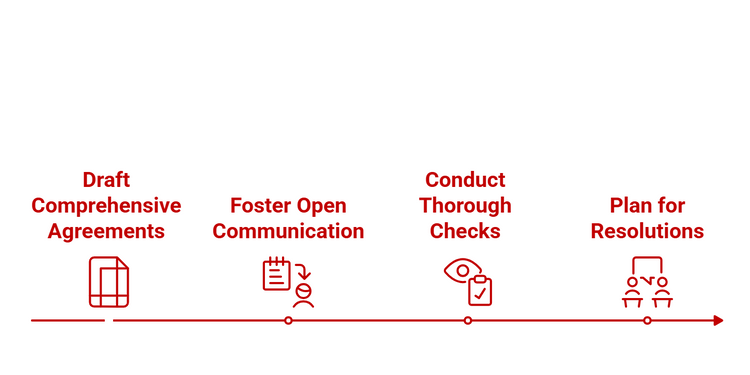
- Stamping timeline
A tenancy agreement must be declared and stamped with IRAS within 14 days of signing if it is signed in Singapore. If the deal is signed overseas, the stamping must be completed within 30 days of its receipt in Singapore.
- Which agreements must be declared?
Written tenancy agreements for residential or commercial properties must generally be declared and stamped if they exceed 14 days continuous or meet annual average rent thresholds (e.g., >$1,000/month). Short-term rentals ≤14 days (e.g., daily/weekly hotel-like) are exempt. This includes HDB rentals and private property leases.
- Consequences of late or missed declaration
Failing to declare a tenancy agreement on time may result in penalties or additional charges. Late stamping can also weaken the agreement’s enforceability if legal issues arise later.
Whether the property is residential or commercial, and regardless of the lease length, timely stamping helps avoid penalties and ensures the agreement remains legally reliable if disputes arise. Staying aware of these timelines allows both landlords and tenants to meet IRAS requirements with confidence.
Which Tenancy Agreement Clauses Need Extra Attention Before Signing?
Tenancy agreements in Singapore include several clauses that deserve close attention before signing, as they directly affect costs, responsibilities, and potential disputes for both landlords and tenants.
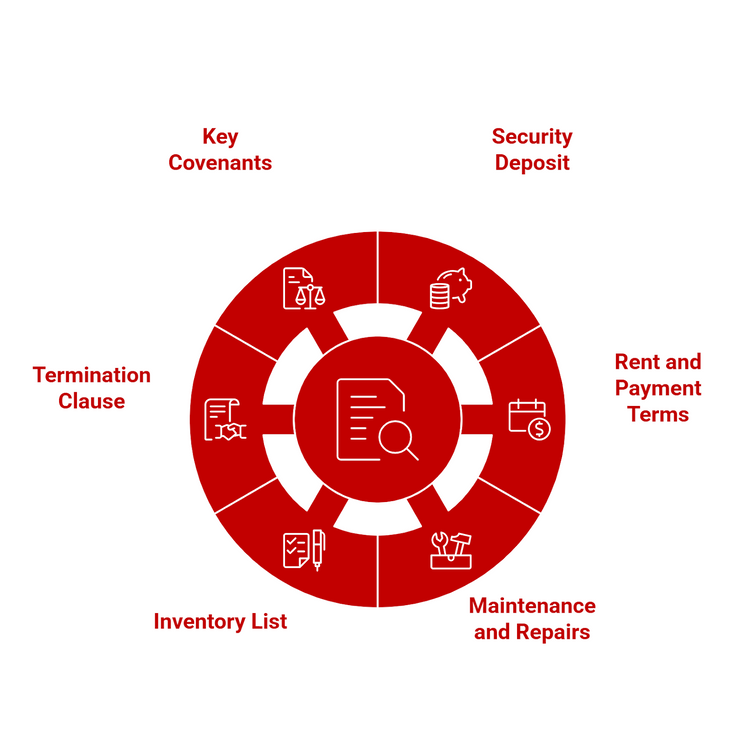
- Security deposit
This clause sets out the deposit amount, usually one month’s rent for a one-year lease and two months for longer terms, along with conditions for deductions and the refund timeline, commonly within 14 days after handover.
Watch for unclear terms around "damages" or "dilapidation," which may allow unfair deductions. A joint inventory with dated photos at move-in helps protect both parties.
- Rent and payment terms
Check the agreed rent, what it includes, the due date, grace period, payment method, and any late payment charges. Ensure there are no hidden escalation clauses or sudden rent increases. Landlords should also confirm that property taxes are not wrongly passed on to tenants.
- Maintenance and repairs
Tenants are usually responsible for minor repairs up to a stated amount after an initial period, while landlords handle structural issues. Look out for one-sided clauses that shift excessive repair costs to tenants. Air-conditioning servicing should be clearly stated, as this is a frequent source of disputes.
- Inventory list
The inventory should list all furniture, appliances, and fixtures along with their condition. Any defects should be recorded in writing with photos or videos at the start of the tenancy. Missing or vague inventory lists often lead to deposit disputes at the end of the lease.
- Termination and diplomatic clause
This clause explains notice periods, early termination rights, and penalties. Tenants, especially expatriates, may need flexibility for job relocation, while landlords seek protection from sudden vacancies. Avoid clauses that heavily favour one party without mutual options.
- Key covenants and obligations
These cover landlord duties, such as providing a habitable property, and tenant obligations, such as restrictions on subletting, pets, or smoking. Pay close attention to indemnity clauses and occupier details, especially for HDB rentals, to ensure responsibilities are balanced and reasonable.
A tenancy agreement plays a vital role in shaping a smooth and secure rental experience for both landlords and tenants in Singapore. From choosing the proper agreement format and understanding HDB-specific rules to meeting IRAS stamping requirements and carefully reviewing key clauses, every step helps reduce uncertainty and prevent avoidable disputes.
Whether you rely on a standard template, a simple tenancy agreement, or a more detailed document, clarity and compliance are what matter most. Taking the time to customise the deal, confirm legal obligations, and address potential risks upfront creates stronger protection for both parties.
With the proper knowledge and preparation, a tenancy agreement becomes more than just paperwork; it becomes a practical tool that supports fair, transparent, and stress-free renting.
For more property news, content and resources, check out PropertyGuru’s guides section.
Looking for a new home? Head to PropertyGuru to browse the top properties for sale in Singapore.
Disclaimer: The information is provided for general information only. PropertyGuru Pte Ltd makes no representations or warranties in relation to the information, including but not limited to any representation or warranty as to the fitness for any particular purpose of the information to the fullest extent permitted by law. While every effort has been made to ensure that the information provided in this article is accurate, reliable, and complete as of the time of writing, the information provided in this article should not be relied upon to make any financial, investment, real estate or legal decisions. Additionally, the information should not substitute advice from a trained professional who can take into account your personal facts and circumstances, and we accept no liability if you use the information to form decisions.