
Our top Singapore and regional property stories.
Developer sales down almost 23% from year ago
New private home sales in Singapore fell by 22.8 percent to 301 units in February 2016, from 390 units in the same period last year, according to data released by the Urban Redevelopment Authority (URA) earlier this month.
On a monthly basis, the sales volume fell by 6.8 percent from the 323 units sold in January 2016, even though new launches surged 31.4 percent to 209 units from 159 units previously.
According to JLL, the “slower developer sales were expected due to the Lunar New Year lull and the continuation of the volatility in the stock market from the previous month”.
By location, sales in the Core Central Region (CCR) fell to 25 units in February, just shy of the 26 units sold in the previous month, and the 30 units sold a year ago.
In the Rest of Central Region (RCR), transaction levels edged up to 82 units from 81 units in January 2016. But compared to the 185 units sold a year ago, this area witnessed the largest year-on-year decline of 56 percent.
Meanwhile, developers sold 194 units in the Outside Central Region (OCR). While this translates to a 10 percent drop from the 216 units moved in the month before, it is an 11 percent, improvement from the 175 units sold in February 2015.
According to PropNex Realty, properties in the OCR accounted for 64 percent of total sales by developers, while those in the CCR and RCR made up nine percent and 27 percent respectively.
The best-selling private residential projects last month were The Panorama, where 18 units were sold at a median price of $1,211 psf, followed by Kingsford Waterbay and Principal Garden, which moved 18 and 16 units at median prices of $1,127 psf and $1,612 psf, respectively.
Looking ahead, new private home sales could fall by around 10 to 15 percent year-on-year to between 1,000 and 1,200 units in Q1 2016, the lowest level seen for the past three years, said Mohamed Ismail, CEO of PropNex.
Nevertheless, transaction volume could rebound in March due to the fairly good performance of two newly launched developments, Cairnhill Nine and The Wisteria.
For the whole of 2016, private home sales are expected to remain weak at around 8,000 units, as long as the property cooling measures remain.
Top property agents earn 66% more than average Singaporean
The median gross monthly commission earned by the top 300 property agents at ERA Realty Network hit $11,686 in 2015, according to latest statistics released by the property agency.
This is 66 percent more than the median gross monthly income of full-time employees in Singapore, which averaged $3,949 last year, based on data from the Ministry of Manpower.
These 300 agents are aged 23 to 65, with four of them above 60 years old, earning more than $133,876 annually despite being of retirement age, noted ERA.
At just 28, property agent Kavin Kuah, who joined ERA in 2012, has earned a median monthly gross commission of $119,873.
“Real estate is a good career path if you are someone who looks forward to no-ceiling income. There are always opportunities around; it’s all about commitment, passion and perseverance,” he said.
Jack Chua, ERA’s CEO, said the company remains resilient, despite the current market downturn and changes in real estate regulations.
“Media channels are reporting that many property agents quit the industry in 2015. However, statistics prove that the performance of (the) property sector is positive.
“Many individuals are lured by factors such as high salaries and work-life balance. However, selling properties has never been a simple sales job. It is a long-term, viable career that requires constant upgrading,” added Chua.
Despite a 6.6 percent drop in the October-to-December licence renewal period in its agent pool, ERA remains the biggest property agency here with 5,947 agents.
To further help its agents, ERA has rolled out a series of initiatives and policies, such as more professional development and market-focus programmes, as well as welfare and benefit schemes to encourage greater work motivation.
Singapore’s housing market among weakest: Knight Frank
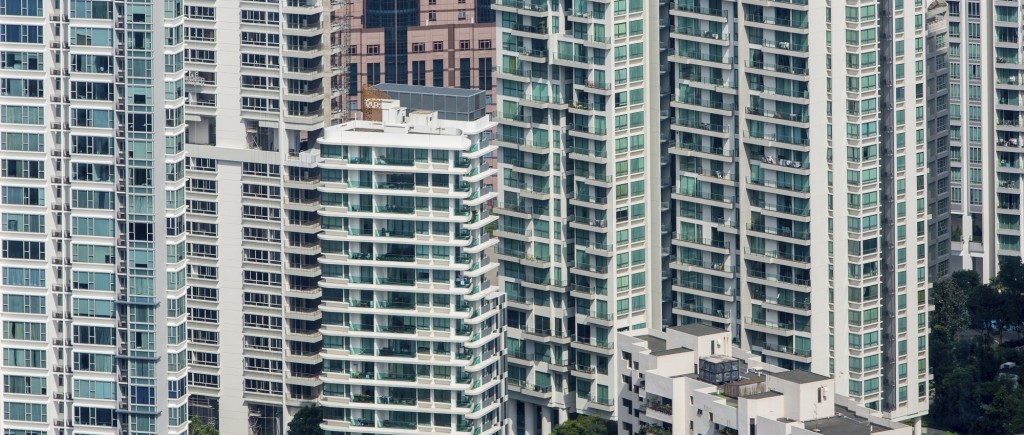
Prices of private residential properties in Singapore remained on the downward trajectory, falling by 3.6 percent in the fourth quarter of 2015 from the previous year, according to Knight Frank’s latest Global House Price Index.
On a quarterly basis, prices slipped by 0.2 percent from Q3 2015. Singapore was ranked 51st out of the 55 housing markets tracked by Knight Frank, which puts it among the weakest performers, Ukraine and Greece.
Between 2009 and 2011, prices of private units surged by 62.2 percent, but have dropped by 8.41 percent since then.
Analysts believe that a number of factors will continue to put pressure on the property market, such as the large pipeline supply of units, weakening demand amid low economic growth, and the market cooling measures which remain in place.
Meanwhile, the world’s housing markets recorded three percent growth on average in 2015. Turkey leads the rankings with prices ending the year 18 percent higher, said Knight Frank.
The consultancy added that its outlook for the year is muted. “We expect the index’s overall rate of growth to be weaker in 2016 than 2015. The global economy is experiencing a potentially dangerous cocktail of low oil prices, a strong dollar and a continued slowdown in China,” said Kate Everett-Allen, Head of International Residential Research at Knight Frank.
900 families got a third HDB loan in 2015
The Housing and Development Board (HDB) granted a third housing loan to around 900 families last year, according to National Development Minister Lawrence Wong during a parliamentary session on Monday (14 March).
Of this, 25 percent are concessionary loans, while about 75 percent consisted of non-concessionary loans, which are based on market rates.
Mr Wong explained that the agency is willing to help families obtain a third HDB housing loan, but it will only be allowed for exceptional cases, usually for households that cannot acquire mortgages from banks, but are in urgent need of such financing.
However, a requirement is that these families should have ample savings and stable incomes to repay their monthly loan instalments.
“As I said, HDB would want to assist applicants to buy a home. But HDB is also wary of people or families, who overstretch themselves, and end up with more debt. I don’t think we want that to happen just for the pursuit of buying a home,” Mr Wong added.
Chinese nationals still buying Singapore homes for their kids
Despite facing weaker currencies and slowing economies, mainland Chinese and Malaysians remain the top foreign buyers of Singapore property, revealed DTZ.
Together, they bought 1,952 private homes in 2015, or 54 percent of total foreign purchases.
Specifically, sales to Chinese nationals fell slightly by 3.8 percent to 998 units, while Malaysian home purchases remained largely unchanged at 954 units.
“The devaluation of the Chinese yuan in August 2015 meant that mainland Chinese nationals found their purchasing power clipped, as their national currency weakened against the Singapore dollar,” said DTZ.
Still, both groups of foreign buyers posted healthy purchases last year compared to 2008, during the Global Financial Crisis, when mainland Chinese only purchased 362 private homes, while Malaysians bought 626 units.
“Singapore’s political stability, transparent real estate policies and strict rule of law positions the city-state ahead of many other countries as a place where investors enjoy a high level of certainty on returns. Many mainland Chinese also bought homes for their children studying in Singapore,” added DTZ.
Meanwhile, the number of Indonesian home purchases fell by 33.6 percent to 279 units, lower than the 618 homes bought in 2008.

Offer shared offices to tackle oversupply in 2016: analyst
As office landlords face stiffer competition for tenants amidst the large amount of incoming supply, landlords are encouraged to consider offering co-working spaces to attract and retain clients, according to Cushman & Wakefield Singapore.
“One suggestion might be for landlords to consider bundling a portion of the vacant space together with committed space under a “co-working concept” for quality anchor tenants,” said Christine Li, Research Director at Cushman & Wakefield Singapore.
Under a shared office set-up, workers from different companies share a work area, facilities and services. This type of office operates largely on a hot-desking basis, where work desks are barrier-free and are available only on a first-come, first-served basis. Thus, one can sit with people with similar or different expertise.
“Landlords could convert undesirable or nonperforming space to cater to the needs of tenants, while tenants will benefit from the extra option to rent the co-working space on an as-need basis.”
Cushman & Wakefield said co-working space is attractive to tenants as it is more affordable than traditional leases and it does away with rental deposits, a boon to cash-strapped entrepreneurs. Under this set-up, landlords charge a monthly membership fee for the use of hot-desking and shared facilities.
This concept is also appealing to businesses, especially tech firms, as it allows them to downsize their operation, or expand without incurring hefty rental costs.
In fact, a study by Cushman & Wakefield revealed that the space requirement of multinational tech firms in Singapore have increased by over 50 percent per year on average since they first established a permanent office here. But the rigid terms of their existing lease agreement prevent them from instantaneously changing their space requirements.
In addition, this set-up provides good profits. Based on Deskmag co-working survey, 72 percent of all co-working spaces in the world have become profitable after more than a years in operation.
Given the stable demand and profit, the property consultancy believes that now is an opportune time for co-working operators to expand as a total of 3.6 million sq ft of grade A office space is projected to enter the market this year.
Since the first co-working office space opened in 2009, there are now nearly 40 shared offices in the city-state.
 |
|||
 |
This article was first published in the print version The PropertyGuru News & Views. Download PDF of full print issues or read more stories now! | ||