
More new flats may be launched next year: Wong
National Development Minister Lawrence Wong said the government may offer more Build-To-Order (BTO) flats next year, as demand is expected to increase with recent policy changes, such as more CPF grants and higher income ceilings.
If the government decides to go ahead with the adjustment, it will only be a slight tweak from the 15,000 units planned for 2015, and will be below 20,000 units.
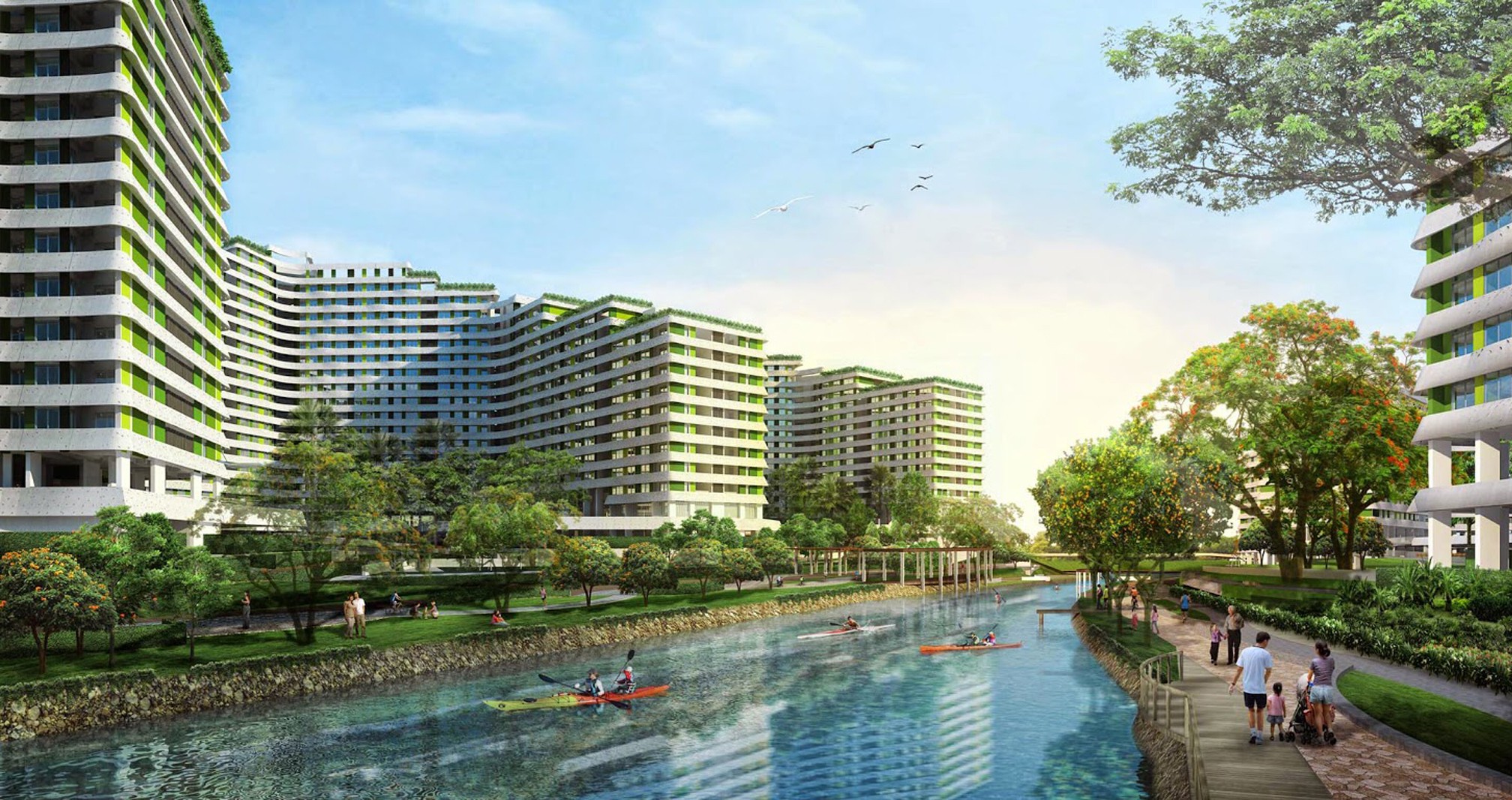
During a visit to the Waterway Terraces in Punggol, Wong said: “We had a huge housing programme where we built more than 20,000 at one time over a few years, then tapered off to 15,000. We are not going back to over 20,000, but it’s a slight adjustment from 15,000.” He explained that the increase in new flat supply does not mean the government is diverting from its “tapering approach” to the housing market.
“We are continuing to taper the housing programme and we will continue to move in that direction. But I think we may need to make some temporary adjustments in order to accommodate this higher demand in housing arising from policy changes.”
Accordingly, Singapore’s youngest HDB town, Punggol, will see 6,391 BTO flats completed by the end of the year, with another 9,876 units added to the town’s supply over the next two years, a Channel NewsAsia report said.
HDB revealed in July that it will slash this year’s new flat supply from 16,900 to 15,000, after having launched around 22,000 units in 2014. Wong noted that HDB will assess the response at the next BTO sales exercise in November, and finalise the supply for next year, before year-end.
Commenting on the property cooling measures, Wong said it is “not time yet” to ease the measures, as price adjustments have been moderate compared with price hikes seen in earlier years. “We don’t want to risk a premature market rebound,” he said.
Flash estimates from the Urban Redevelopment Authority (URA) and HDB showed that home prices hit a two-year low in Q3 2015. Aside from this, easing the property cooling measures will also depend on various other factors, said Wong.
“We watch the situation very carefully, not just price indicators but a whole range of indicators — the economic situation, the situation overseas, whether the Fed (US Federal Reserve) is going to increase interest rates and by how much and when, and our own domestic situation,” he said, noting that the cooling measures not only helped to stabilise the property market, it also allowed for an orderly adjustment in prices towards a more sustainable property market.
Two-year dry spell for collective sales
Lacklustre demand continues to weigh down Singapore’s collective sales market, with only two deals closed since the start of 2014, a significant decline from the 16 transactions in 2013, revealed JLL data.
Analysts attribute the drop in demand to various factors, including property cooling measures, the complexity of en bloc sales, ample supply of government land sites and weak home-buying sentiment, reported The Straits Times.
Notably, around 10 attempts at en bloc sales failed over the last two years, including the S$1.39 billion collective sale of Spring Grove condominium at Grange Road.
Meanwhile, the collective sale of Amber Park in Katong closed in July with no bids. Katong Omega Apartments was the only en bloc sale recorded last year, while Thong Sia Building on the Orchard shopping belt is the only one registered so far this year.
JLL revealed the ideal price for an en bloc sale ranges from S$50 million to S$300 million. “Beyond S$300 million or S$500 million, the number of developers which are prepared to (invest) and capable of investing goes down dramatically,” JLL international director Karamjit Singh said.
Analysts noted that the sheer size of some developments, like Laguna Park and Normanton Park, each spanning over 660,000 sq ft, places developers at significant risk in a market plagued by slow sales. “The Additional Buyer’s Stamp Duty (ABSD) is a big challenge for large sites because the developer has to complete the project and fully sell it within five years, or face a penalty of 15 percent of the land price,” said Alice Tan, Knight Frank Singapore head of research.
However, deals under S$100 million, such as Derby Court in District 11 and Riviera Point in District 9, had no takers either. Chesterton’s Donald Han said that these attempts to go en bloc were unsuccessful because the sites were in prime areas, where demand is lacking.
Singapore dollar appreciation eased further
The Monetary Authority of Singapore (MAS) on 14 October announced that it is reducing the pace of the Singapore dollar appreciation for the second time this year, in an effort to revive dwindling growth, after the economy narrowly avoided technical recession in Q3.
The central bank, which manages the economy through guiding the currency instead of setting interest rates, said “it will continue with the policy of a modest and gradual appreciation of the Singapore dollar nominal effective exchange rate (S$NEER) policy band,” but will slightly reduce the rate of its appreciation.
“There will be no change to its slope, width and the level at which it [S$NEER] was centered,” it said.
MAS guides the local currency against an undisclosed basket and adjusts its appreciation or depreciation pace by changing the slope, width and center of a band. It, however, does not disclose details of the basket, the band, and the pace of appreciation or depreciation. “This policy stance was assessed to be appropriate in view of the moderate growth and inflation prospects,” it added.
MAS adjusted its monetary policy in an unscheduled meeting in January, and left it unchanged in the first of two scheduled meetings this year in April.
“Following the Monetary Policy Statement (MPS) in April, the S$NEER appreciated amid a broad-based retraction in US$ strength. Since July, however, the S$NEER has weakened and largely fluctuated in the lower half of the policy band.”
According to MAS, this reflected renewed expectations of tightening in US monetary policy and “a rise in global risk aversion, mainly stemming from fears of a more significant downturn in China and other emerging market economies.”
Meanwhile, the central bank said the economy registered marginal growth of 0.1 percent on a quarter-on-quarter in the third quarter, following the 2.5 percent contraction previously, advanced estimates revealed. This allowed the economy to avoid a technical recession.
Private home sales plunge 34% in Sept
Property developers only sold 341 private housing units in September 2015, down 34 percent from the 513 units sold in the previous month, according to the data released by the Urban Redevelopment Authority (URA).
Year-on-year, new private home sales fell 47 percent from the 648 units moved in September 2014.
Nicholas Mak, executive director of research and consultancy at SLP International, said the drop in sales volume may have been due to investors’ fear of a potential technical recession and a hike in interest rates.
Data from the Ministry of Trade and Industry (MTI) shows that Singapore avoided a technical recession in Q3, with quarter-on-quarter growth of 0.1 percent.
High Park Residences in Fernvale emerged as the best-selling development last month with 46 units sold. Botanique at Bartley and Highline Residences at Kim Tian Road followed with 38 and 21 units sold respectively.
The Outside Central Region (OCR) accounted for the bulk of private home sales last month with 253 units sold, while the Core Central Region (CCR) accounted for 20 units and the Rest of Central Region (RCR) with 68 units. Over in the EC segment, 288 units were sold in September, down 38 percent from the previous month’s 466 units.
Last month’s figure takes total private homes sold during the first nine months of 2015 to 5,963 units, down by a little over one percent from the 6,030 units sold over the same period last year, but 53 percent lower compared to the 12,666 units transacted in the corresponding period in 2013.
PropNex Realty CEO Mohamed Ismail said the year-on-year declines indicate “the sustained impact since the Total Debt Servicing Ratio framework was imposed in June 2013.”
“Based on the above trend, private new home sales could be headed for an annual take-up of about 8,000 units in 2015 — one of the lowest in recent years.”
Ismail expects a rebound in transaction volume in Q4 2015, resulting from the planned launches of various developments. However, he cautioned that the continued enforcement of cooling measures may sap demand and prevent a market pick-up from being sustained.
Singapore still attractive to foreign investors
Despite the slowing property market and implementation of cooling measures, Singapore remains attractive to foreign investors, emerging third in Knight Frank’s list of global markets with the highest percentage of foreign investments in the first half of the year.
In its Global Cities: The 2016 Report, Knight Frank revealed that India emerged as the market with the highest percentage of foreign investment at 67 percent, followed by Malaysia (59 percent) and Singapore (43 percent).
“Singapore property remains on the radar for many foreign investors, given the city’s multiple qualities especially in infrastructure and urban planning,” said Alice Tan, Director and Head of Consultancy & Research, Knight Frank Singapore.
“Despite the prevailing property cooling measures and the downward trend in prices and rents, foreign investors are generally confident of Singapore’s long-term prospects. They are mainly from China, Australia and the Middle East.”
Notably, Singapore’s office leasing market is currently seeing lower rents in the second half of this year compared to previous highs in early 2015, as demand from large-space tenants waned against the backdrop of muted market sentiment and the slowing economy, said Tan.
Thailand rolls out new property measures
The Thai government has approved a series of stimulus measures in the hope of boosting the sluggish property market by introducing cuts in fees and taxes to help low-income citizens who have struggled to secure mortgages.
The incentives, implemented 14 October, will run until April 2016. These include reductions in the housing transfer fee to 0.01 percent from two percent, and bringing down mortgage fees to 0.01 percent from one percent.
Meanwhile, another incentive will kick in at the start of 2016. Buyers of homes costing less than THB3 million (approx. S$117,091) will benefit from a tax deduction of 20 percent of the total price.
At the same time, the Government Housing Bank (GHB) will offer soft loans amounting to THB10 billion for homebuyers who have been rejected by commercial banks. If insufficient, the government has the option of increasing the soft loan budget. The duration is one year starting from the middle of this month. Eligible borrowers must be earning THB30,000 or less each month.
According to Deputy Prime Minister Somkid Jatusripitak and Finance Minister Apisak Tantivorawong, the measures were implemented in an attempt to help low-income earners purchase homes.
Apisak pointed out that mortgage approvals were the main reason why the market has slowed down as rejection rates by financial institutions have reached critical levels and low-income borrowers have not been able to obtain home loans in recent times.
The government is targeting low-income buyers with these new measures, to prevent homebuyers using them for speculative purposes.
 |
|||
 |
This article was first published in the print version The PropertyGuru News & Views.Download PDF of full print issues or read more stories now! | ||