

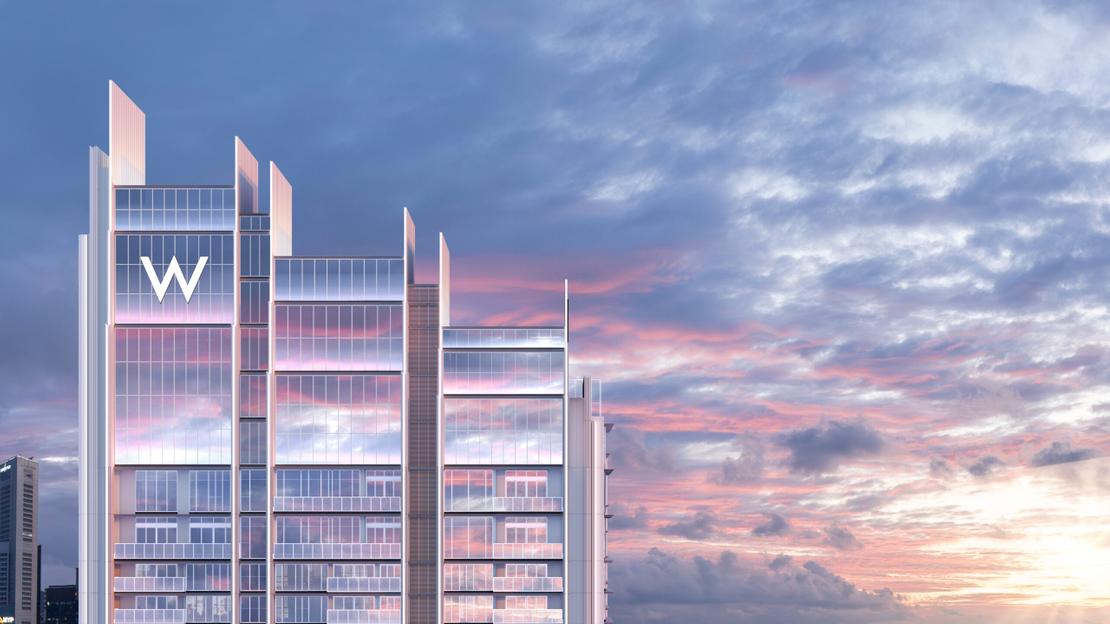
When IOI Central Boulevard Towers reached its final Temporary Occupation Permit in December 2024, it did more than add a new profile to Singapore’s CBD skyline. Leasing momentum into 2025 pushed committed occupancy towards 75% early in the year and sent a signal about demand for Grade A office space in a cautious market.
For IOI Properties Group, it was a defining moment: proof that a Malaysia-born developer could deliver at the top end of an international investment market. Its Best Transnational Developer win at the PropertyGuru Asia Property Awards (Singapore) 2025 recognises the broader pattern behind that project. It’s a company that has learned to move across borders without losing its footing.
IOI’s roots lie in township development in Malaysia, where the group established its reputation through large-scale, long-horizon projects. Since its founding in 1975, the company has completed more than 100 developments and built out a portfolio spanning retail, hospitality, industrial assets and mixed-use precincts.
Yet its evolution into a regional player has been defined less by expansion for its own sake than by understanding what each market needs and where IOI can make the most impact.
Navigating three economies moving at different speeds is not straightforward. Singapore’s property market remains tightly regulated; Malaysia is in a period of renewed retail and tourism momentum; China is recalibrating its real estate landscape. Currency movements, construction inflation and shifting post-pandemic demand have made regional planning more intricate. The fact that IOI has gained ground across all three contexts speaks to a development model built on long-term planning rather than short-cycle bets.
Across the border, IOI continued consolidating its position in Malaysia. The acquisition of Tropicana Gardens Mall in Petaling Jaya strengthened its retail platform, while its hospitality portfolio expanded with W Kuala Lumpur, Courtyard by Marriott Penang and the soft opening of Moxy Putrajaya — the brand’s Malaysian debut. These moves coincided with a broader uptick in domestic and regional travel, giving the group strong operational momentum.
IOI also made a decisive push into the industrial sector in 2024 with the launch of the IOI Industrial Park series in Banting and Iskandar Malaysia, alongside plans for Melaka. Industrial real estate has become one of Southeast Asia’s more resilient asset classes, and IOI’s shift reflects a clear reading of demand patterns shaped by logistics growth, supply chain restructuring and manufacturing investment.
Further afield, IOI Business Park in Xiamen completed in 2024 and reached full occupancy shortly after. In a market where office absorption has varied across cities, the development’s 100% tenancy stands out. It has begun contributing steady recurring income, giving the group a stable foothold in one of China’s important coastal hubs.
IOI’s distinction as a transnational developer lies less in the number of markets it is in than in the way it adapts its portfolio to each one. In Singapore, the focus is on investment-grade commercial assets. In Malaysia, the group leans into its strengths in townships, retail, hospitality and industrial platforms. In China, it has chosen targeted commercial assets that build long-term income. Few regional developers maintain this level of coherence; IOI’s cross-border moves feel intentional rather than opportunistic.
This approach demands disciplined risk management. Operating across borders requires staging capital through different cycles, managing regulatory divergence and maintaining organisational clarity across multiple asset classes. IOI’s ability to hold a long view through each of these challenges has shaped its growth as much as any completed development.
Sustainability continues to move through its portfolio. The group is integrating energy-efficient design and environmental performance standards across its developments, particularly in asset classes where international operators and corporate tenants expect measurable ESG progress. It’s a steady, infrastructure-led approach rather than a headline-driven one, aligned with the needs of its regional footprint.
Looking ahead, IOI’s regional identity is set to deepen. ICBT will anchor its Singapore presence, hospitality and industrial growth will drive its next phase in Malaysia, and commercial assets in Xiamen lay the groundwork for a long-term China strategy. What connects these moves is not scale alone, but a consistent understanding of how each market works — and how best to build within it.
In a region where volatility often sets the pace, IOI’s strength lies in matching each market’s tone while keeping a steady line of its own. That combination of reach and restraint is what now defines the group’s presence across Singapore, Malaysia and China, and what the Best Transnational Developer accolade formally brings into focus.
Disclaimer: The information is provided for general information only. PropertyGuru Pte Ltd makes no representations or warranties in relation to the information, including but not limited to any representation or warranty as to the fitness for any particular purpose of the information to the fullest extent permitted by law. While every effort has been made to ensure that the information provided in this article is accurate, reliable, and complete as of the time of writing, the information provided in this article should not be relied upon to make any financial, investment, real estate or legal decisions. Additionally, the information should not substitute advice from a trained professional who can take into account your personal facts and circumstances, and we accept no liability if you use the information to form decisions.